
CONSULTING
Passive Fire Protection Systems
Objectives
Working Method
Minimum Information Required
- Plot Plan
- Chemicals Used in the Process
- P&ID
Study Development
- Determination of the fire zone
- Determination of the temperature curve in the event of a fire (growth rate)
- Specification of thermal load limits for the materials used (exposure time)
- Determination of structures to be implemented based on site and fire characteristics
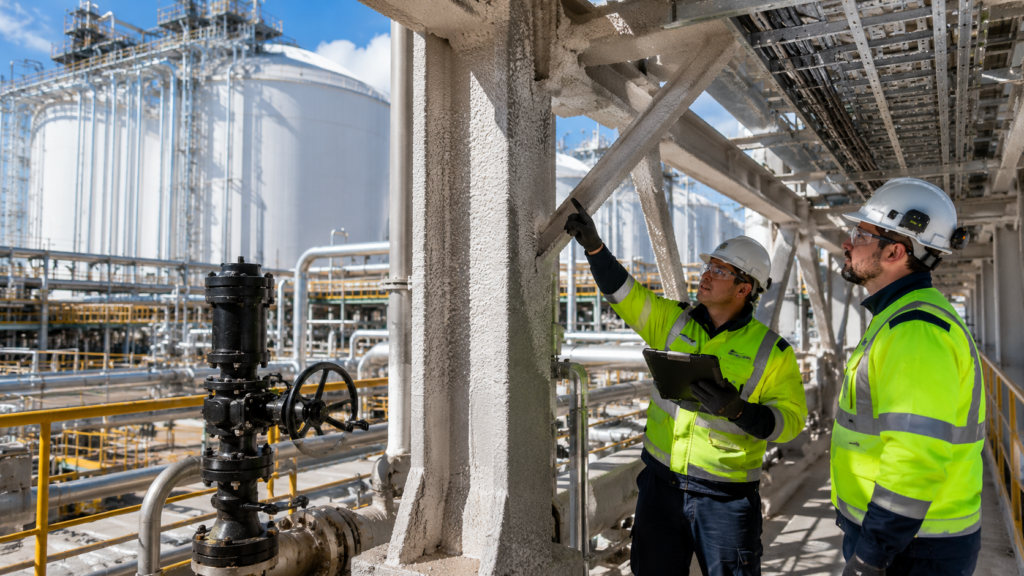
A systematic process that includes fire-resistant materials and their application, providing a degree of fire resistance to protected substrates and assemblies. While equipment design, location, and spacing are of substantial importance in minimizing equipment damage during a fire, additional protection measures may still be necessary. Passive fire protection can provide an effective alternative to active systems for protecting vessels and structures from failure. It generally consists of a coating of fire-resistant insulating materials applied to a vessel or steel surface.
The primary objective of passive protection is achieved during the early stages of a fire, when efforts are primarily directed toward shutting down units, isolating fuel flow to the fire, operating fixed suppression equipment, and establishing cooling water streams. During this critical period, if pipe supports and non-fireproofed equipment lose strength due to fire-related heat or explosions, they may collapse and cause joint failures, line ruptures, and hydrocarbon leaks.
Additionally, if control or power wiring is disabled, it may become impossible to operate emergency isolation valves, vent vessels, or manually or automatically activated water spray systems.
Fire protection does not extinguish fires and may not have a significant effect on final property damage if intense fire exposure persists significantly longer than the passive fire protection system was designed for, since it is only effective for short-duration exposure (1–2 hours).
Results
General study documentation